
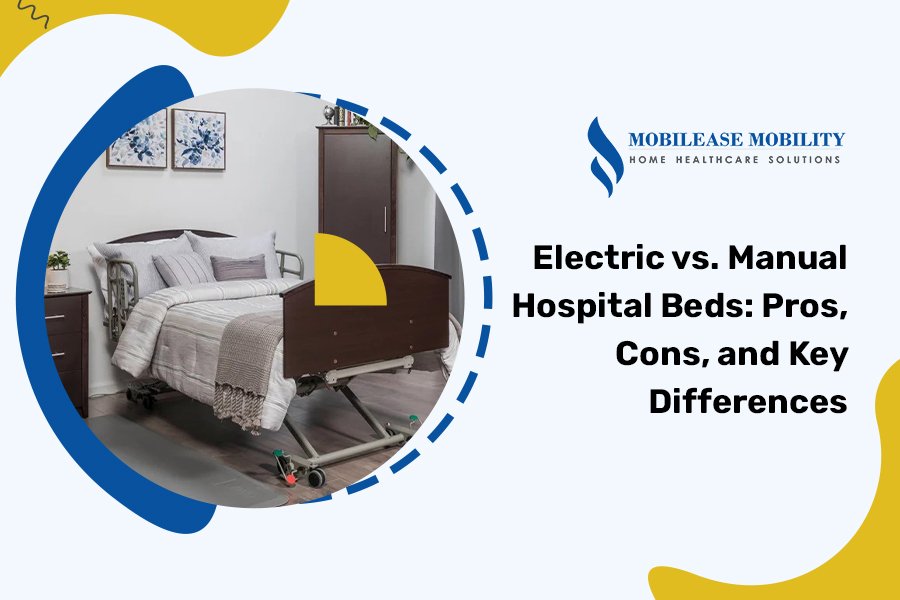
MobilEase Mobility Inc. understands that choosing between electric and manual can be difficult when considering medical considerations, caregiver assistance, and money. In this Article, we look at the benefits and downsides of electric and manual hospital beds and when to utilise each. Considering long-term care or looking for a hospital bed for sale? This comparison will help you make a choice.
Understanding Hospital Beds: Basics
Hospital beds help patients heal, manage chronic diseases, and move. Home hospital beds are safe, adjustable, and accessible. Lockable casters, optional side rails, therapeutic head and foot positions, and height adjustment for safe transfers are significant features. These qualities reduce caregiver stress and improve patient stability. Electric and manual hospital beds adjust manually or motorised.
Deep Dive: Manual Hospital Beds
What They Are
Hand cranks at the foot operate manual hospital beds. Head, foot, and bed height are adjusted via cranks.
Dependable, Affordable
Cost is a key benefit of manual hospital beds. Their lower initial cost makes them ideal for short-term recovery or budget-constrained settings.
Also reliable: manual beds. Mechanical failure and maintenance decrease with fewer electrical parts. Electricity-free mattresses are beneficial in power-deprived locations.
Cons: Dependence and Physical Demand
Caregivers find manual hospital beds straightforward but physically hard. Cranking all day can tire, hurt, and damage.
Every manual bed adjustment requires caregiver assistance. Lack of freedom can lower comfort, dignity, and satisfaction. Slower, less precise changes may slow repositioning.
When Manual Beds Make Sense
Manual hospital beds work well when positioning is limited, caregiver support is consistent and physically capable, and cost is the main factor.
Deep Dive: Electric Hospital Beds
What They Are
Electric hospital beds’ motors are managed via a handheld remote. Full-electric models change head, foot, and bed height with one touch.
Pros: Security, freedom, and ease
Electric hospital beds empower patients. Quick adjustments improve comfort and reduce caregiver demand. Patients with limited mobility and chronic conditions benefit from autonomy.
Caregivers gain. Electric adjustments relieve back pain and allow caregivers to focus on caring.
Precision is another benefit. Electric motors improve breathing, manage oedema, and promote post-surgical rehabilitation with smooth placement. Height modification makes bed transfers safer for wheelchairs and walkers. Several MobilEase Mobility Inc. electric beds include battery backups.
Cost and power dependence
Electric hospital beds cost extra upfront. Although they need energy, battery backups reduce this concern. Modern designs are durable and reliable despite extra upkeep.
Video Highlight: Electric Benefit
A video of an electric hospital bed shows its benefits immediately. Technology allows seamless height adjustments and repositioning. Electric options improve safety, reduce caregiver fatigue, and allow patients to choose their comfort, unlike manual alternatives.
Key Selection Factors
Choosing a hospital bed requires an honest evaluation of daily care needs:
Patients who often reposition, caregivers with restricted mobility, medical disorders that require precise positioning, and long-term planning for progressive diseases benefit from electric beds. Considering these characteristics while shopping for hospital beds for home use helps fulfil current and future needs.
MobilityEase Inc. Expert Advice
MobilEase Mobility Inc. knows every care scenario is different. Our professionals guide families through feature, size, and configuration selection. Medical demands, caregiver comfort, and money are always considered when considering a hospital bed for sale or arranging long-term home care.